Kenya is globally celebrated as one of the world’s most iconic wildlife destinations, with unmatched opportunities to see Africa’s big cats, lions, leopards, cheetahs, servals, and caracals in their natural habitat.
From the sweeping savannahs of the Maasai Mara to the rugged landscapes of Samburu and the mist-covered forests of Aberdares, Kenya delivers a safari experience that blends exceptional biodiversity, dramatic landscapes, rich conservation history, and high wildlife density.
Why Kenya Is A Top Big Cat Destination
Kenya’s reputation as the “Home of Big Cat Safaris” is backed by decades of wildlife research, globally recognized documentaries, and vast, interconnected ecosystems supporting large carnivore populations.
Why Kenya Stands Out:
- High big cat density — especially lions and cheetahs
- Diverse ecosystems: drylands, savannah, mountains, forests
- Multiple protected areas and community conservancies
- Reliable, year-round sightings
- World-famous Mara predators shown in BBC and DisneyNature documentaries
- Strong conservation programs led by KWS and NGO partners
Additionally, Kenya’s blend of tourism infrastructure, quality lodges, trained guides, and responsible conservancy management ensures an unforgettable safari experience.
Understanding Kenya’s Big Cats
Before diving into the top destinations, it helps to understand the cats you’re likely to see:
Lion (Panthera leo)
Kenya is home to ~2,500 lions.
Where to see lions: Maasai Mara, Tsavo, Samburu, Amboseli, Laikipia.
Leopard (Panthera pardus)
Elusive and solitary, known for tree lounging.
Best places: Samburu, Ol Pejeta, Mara River region, Lake Nakuru.
Cheetah (Acinonyx jubatus)
Fastest land animal, prefers open plains.
Top areas: Maasai Mara, Amboseli, Tsavo East, Laikipia.
Caracal
A rare, sleek desert cat.
Best destinations: Samburu, Laikipia, Amboseli fringes.
Serval
A long-legged, spotted cat is often seen in wetlands.
Where to see: Maasai Mara, Aberdare, Ol Pejeta.
Top Big Cat Destinations In Kenya
Below is an expanded, comprehensive breakdown of the best places to see big cats in Kenya, complete with wildlife patterns, landscapes, and safari tips.
1. Maasai Mara National Reserve – The Big Cat Capital of Africa
The Maasai Mara is arguably the greatest big cat destination in the world, famous for its High Lion Density, Cheetah Hunts, and Elusive Leopards.
Why The Mara Is Unmatched
- Home to over 20+ lion prides
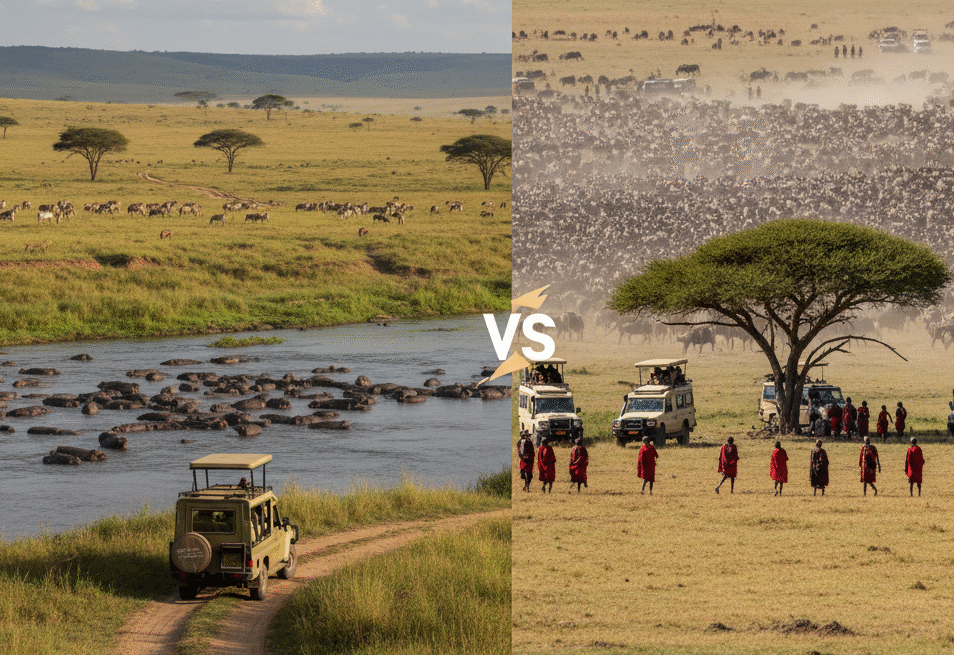
- Central stage for the Great Wildebeest Migration (July–October)
- Excellent cheetah sightings on wide-open plains
- Riverine forests are ideal for leopard spotting
- Well-trained guides with expert tracking skills
The Mara’s endless grasslands provide incredible visibility, making it a paradise for photographers.
Hotspots Inside The Mara
- Musiara Marsh — home of the iconic Marsh Pride
- Ol Kiombo & Talek — exceptional leopard sightings
- Paradise Plains — known for cheetah families
- Mara Triangle — diverse predator activity during migration
What To Expect
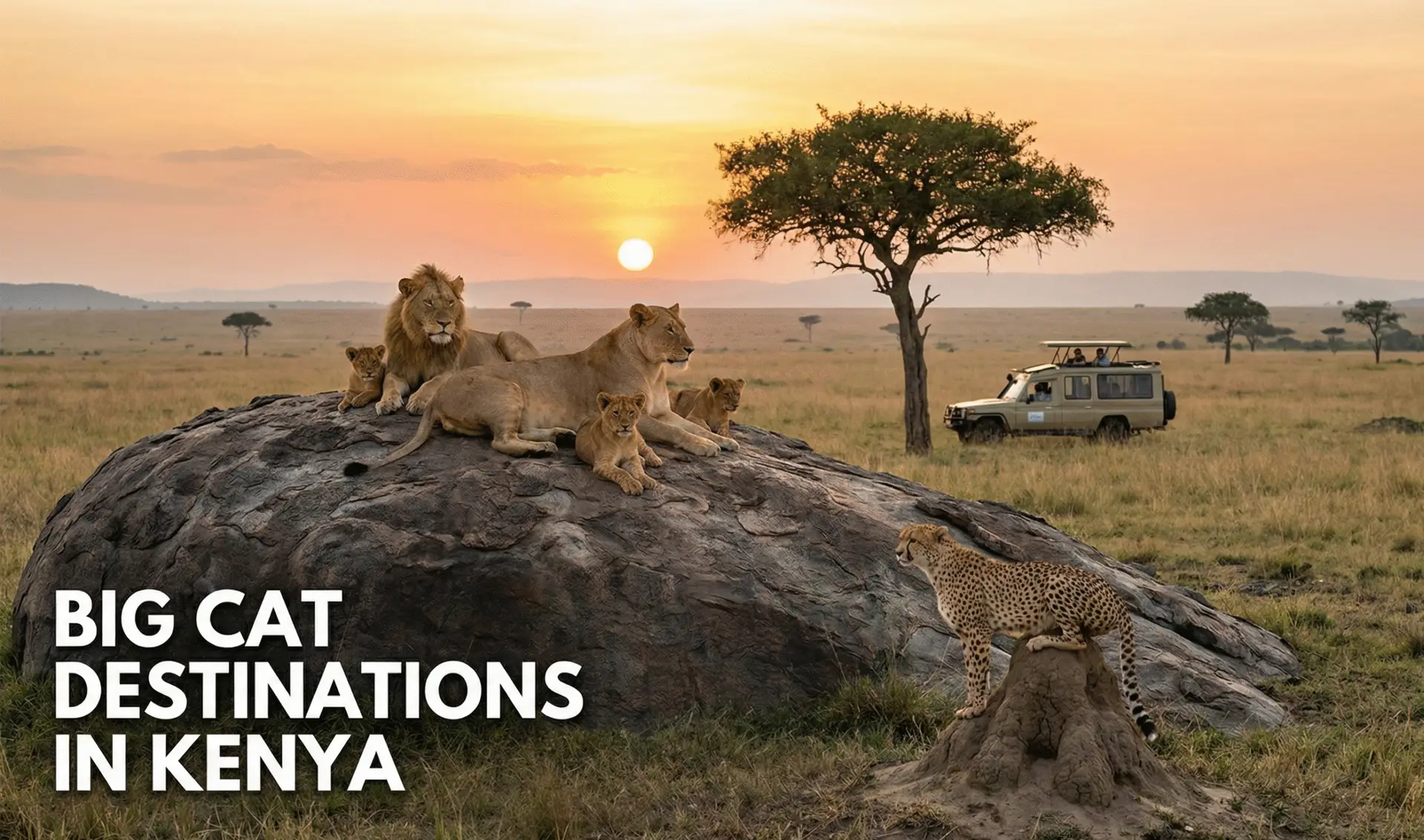
The Mara guarantees near-daily big cat encounters, lion prides on buffalo kills, cheetahs using termite mounds as lookout points, and leopards lounging in fig trees.
2. Mara Conservancies – Exclusive, Premium Big Cat Safaris
Bordering the national reserve are private conservancies that boast equal or better big cat density with far fewer vehicles.
Top Conservancies
- Olare Motorogi Conservancy
- Naboisho Conservancy
- Mara North Conservancy
- Ol Kinyei Conservancy
Advantages of Conservancy Safaris
- Off-road driving allowed — perfect for photography
- Night game drives available
- Limited vehicle density
- Access to private lion and cheetah territories
Conservancies offer the best of exclusivity, luxury, and wildlife immersion.
3. Samburu National Reserve – Leopard Territory & Rare Kenya Species
Samburu is a semi-arid reserve famous for leopards, unique wildlife, and stunning desert-like scenery.
Why Samburu Is Special
- Leopards are frequently seen along the Ewaso Nyiro River
- Lions and cheetahs are active in the open, yellow-barked acacia land
- Home of the Special Five.
- Grevy’s zebra
- Reticulated giraffe
- Somali ostrich
- Beisa oryx
- Gerenuk
Best Spots For Big Cats
- Rocky outcrops for leopard spotting
- Riverbanks for lion activity
- Floodplains are perfect for cheetahs
Samburu’s big cats are accustomed to vehicles, so photo opportunities are outstanding.
4. Ol Pejeta Conservancy – Best Place For Leopard Spotting
Ol Pejeta in Laikipia is famed for its thriving leopard population and balanced predator-prey ecosystem.
What Makes Ol Pejeta Great for Big Cats
- Many leopards inhabit its riverine forests
- Healthy cheetah numbers
- Strong lion prides
- Night drives for seeing curious nocturnal cats
Ol Pejeta is also home to:
- The last two northern white rhinos
- Kenya’s largest black rhino population
- Frequent wild dog sightings
It’s ideal for photographers wanting fewer crowds and flexible tracking.
5. Laikipia Plateau – A Predator Conservation Stronghold
Laikipia is a mosaic of private conservancies supporting some of Kenya’s most successful carnivore conservation efforts.
Big Cats In Laikipia
- High leopard numbers
- Lions are recovering due to reduced conflict
- Cheetahs across open savannahs
- Occasional sightings of caracals and servals
- Wild dog packs (bonus)
Top Conservancies
- Loisaba Conservancy
- Lewa Wildlife Conservancy
- Borana Conservancy
- Sosian Ranch
Laikipia is rugged, exclusive, and ideal for multi-day predator tracking.
6. Amboseli National Park – Cheetah & Elephant Territory
Though famous for elephants, Amboseli is also a top cheetah destination.
Why Amboseli Works For Big Cats
- Open plains are perfect for hunting
- Lions are active around swamps
- Leopards are seen in hills and woodland areas
- Clear photography under the Mt. Kilimanjaro backdrop
Unique Feature
Cheetahs here often hunt on open ground, creating spectacular chase scenes rarely seen elsewhere.
7. Tsavo East & Tsavo West – Land Of the Red Lions
The Tsavo ecosystem is one of Africa’s largest protected wildlife areas, offering exceptional wilderness experiences.
Wildlife Highlights
- Lions with reddish coats
- Elusive leopards
- Good cheetah populations
- Massive elephant herds
Tsavo East
Better for cheetah and lion sightings thanks to open terrain.
Tsavo West
Rocky landscapes favor leopards, especially at Mzima Springs & Ngulia.
This region is perfect for travelers seeking wild, uncrowded safari experiences.
8. Lake Nakuru National Park – Easy & Reliable Big Cat Sightings
Lake Nakuru is compact but rich in predators.
Cat Sightings
- Tree-climbing lions
- Abundant leopards
- Occasional several sightings
It is ideal for short safaris.
9. Meru National Park – Quiet, Underrated & Full of Predators
Meru is breathtaking yet less visited, offering a true wilderness safari.
Why Visit Meru for Big Cats
- Large, thriving lion population
- Frequent cheetah sightings
- Dense riverine leopard territory
- Home of Elsa (from Born Free)
Meru is excellent for travelers seeking solitude and authentic bush landscapes.
10. Aberdare National Park – Forest Leopards & Rare Cats
Aberdare is unique due to its misty forests and mountainous terrain.
Big Cats Here
- Leopards (especially large black individuals)
- Serval cats
- Rare melanistic species
It’s one of the few places where black leopards have been photographed.
Best Time To See Big Cats In Kenya
Kenya’s big cats can be seen year-round, but seasons influence visibility.
Dry Season (June–October)
Best visibility and hunting action.
Green Season (November–March)
Fewer tourists, lush scenery, excellent sightings.
Long Rains (April–May)
Still rewarding, but some areas become muddy or inaccessible.
Big Cat Behaviour: What To Expect On Safari
Understanding their behavior increases your chances of good sightings:
Lions
- Active at dawn and dusk
- Spend up to 20 hours resting
Leopards
- Solitary
- Prefer trees or rocky areas
- Active mostly at night
Cheetahs
- Hunt during the day
- Use termite mounds as vantage points
Servals
- Often seen at dusk near marshy areas
Caracals
- Rare and shy, prefer arid landscapes
How To Choose The Best Safari Experience
Lodge or Camp Type
- Conservancy camps offer exclusivity
- Reserve lodges may be better for budget travelers
Guide Quality Matters
Great guides understand big cat territories and behavior patterns.
Vehicle Type
Open vehicles offer better photography angles.
Best Photography Tips For Big Cat Safaris
- Use a 200–600mm lens
- Shoot during the golden hours
- Use a bean bag for window stabilization
- Focus on the eyes for dramatic portraits
- Be patient — big cat moments unfold slowly
Conservation & Threats
Kenya’s big cats face threats from:
- Habitat loss
- Human–wildlife conflict
- Poaching
- Climate change
Key conservation organizations:
- Kenya Wildlife Service (KWS)
- Mara Predator Conservation Programme
- Ewaso Lions
- Ol Pejeta Conservancy
Conclusion
Kenya stands unrivaled as a premier big cat destination, delivering unforgettable safari encounters with lions, leopards, cheetahs, servals, and caracals.
Whether exploring the world-famous Maasai Mara, tracking leopards in Samburu, or watching cheetahs hunt in Amboseli, Kenya’s wildlife experiences are unmatched in scale, diversity, and drama.